
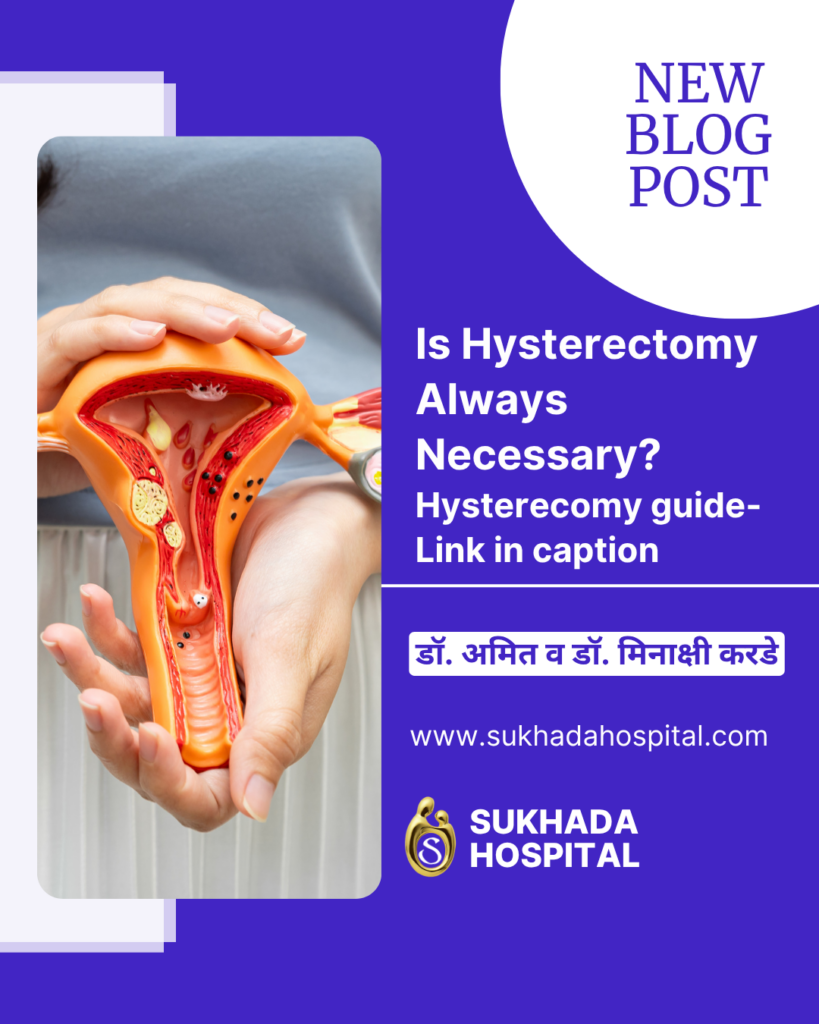
Women often ignore symptoms like heavy bleeding, pelvic pain, fibroids, or abnormal periods for years until they start affecting daily life, work, and emotional well-being. In some cases, a hysterectomy becomes the safest and most effective treatment option.
At Sukhada Hospital, Ahilyanagar, Dr. Karade and team provide expert evaluation and advanced surgical care for women suffering from gynecological conditions that may require hysterectomy. With modern surgical techniques, personalized treatment planning, and compassionate care, women can recover faster and regain a better quality of life.
This detailed guide answers the most common questions about hysterectomy, its indications, types, recovery, and treatment options available in Ahilyanagar.
A hysterectomy is a surgical procedure in which the uterus (womb) is removed. After the surgery, a woman will no longer have menstrual periods and cannot become pregnant.
Depending on the medical condition, the surgery may also involve removal of:
- Cervix
- Ovaries
- Fallopian tubes
Hysterectomy is one of the most commonly performed gynecological surgeries worldwide and is recommended only when medically necessary.
A hysterectomy may be advised for several gynecological conditions, especially when medications or conservative treatments fail.
Common reasons include:
- Uterine Fibroids
Fibroids can cause:
- Heavy bleeding
- Pelvic pressure
- Severe cramps
- Frequent urination
- Enlarged abdomen
- Heavy Menstrual Bleeding
Some women experience excessive bleeding leading to:
- Weakness
- Anemia
- Fatigue
- Poor quality of life
- Endometriosis
A painful condition where tissue similar to the uterine lining grows outside the uterus.
- Adenomyosis
This occurs when the inner lining of the uterus grows into the muscular wall of the uterus, causing severe pain and heavy periods.
- Uterine Prolapse
When the uterus slips downward into the vagina due to weakened pelvic muscles.
- Chronic Pelvic Pain
Persistent pelvic pain that does not improve with medications or other treatments.
- Gynecological Cancers
Hysterectomy may be necessary in cancers involving:
- Uterus
- Cervix
- Ovaries
The type of hysterectomy depends on the patient’s condition.
Total Hysterectomy
Removal of:
- Uterus
- Cervix
Partial (Subtotal) Hysterectomy
Only the upper part of the uterus is removed while the cervix is left in place.
Radical Hysterectomy
Usually performed for cancer treatment and involves removal of surrounding tissues.
Hysterectomy with Removal of Ovaries
In some cases, ovaries and fallopian tubes may also be removed.
Modern gynecology offers multiple surgical approaches.
Laparoscopic Hysterectomy
Also called minimally invasive or keyhole surgery.
Benefits include:
- Smaller cuts
- Less pain
- Faster recovery
- Reduced blood loss
- Shorter hospital stay
Vaginal Hysterectomy
The uterus is removed through the vagina without abdominal cuts.
Open Abdominal Hysterectomy
A larger incision is made on the abdomen. Usually recommended in complicated or very large cases.
At Sukhada Hospital, the surgical approach is selected based on the patient’s condition, age, medical history, and overall health.
No. Hysterectomy is not required in every gynecological problem.
Many conditions can initially be managed with:
- Medicines
- Hormonal treatment
- Lifestyle changes
- Minimally invasive procedures
A proper evaluation by an experienced gynecologist is important before deciding on surgery.
At Sukhada Hospital, patients are carefully evaluated and conservative treatment options are considered whenever possible.
Before surgery, the doctor may advise:
- Blood tests
- Ultrasound
- Pap smear
- MRI scan (in selected cases)
- Endometrial biopsy
- ECG and fitness evaluation
These tests help determine the exact cause of symptoms and ensure safe surgery planning.
The surgery usually takes:
- 1 to 3 hours
The duration depends on:
- Type of hysterectomy
- Surgical approach
- Size of uterus
- Presence of adhesions or endometriosis
Hospital stay varies depending on the surgical method.
Laparoscopic Surgery
Usually:
- 1 to 3 days
Open Surgery
Usually:
- 4 to 7 days
Recovery is generally faster with minimally invasive surgery.
Recovery differs from person to person.
Common Recovery Timeline
First Few Days
- Mild pain
- Fatigue
- Light vaginal discharge
2–4 Weeks
- Gradual improvement in daily activities
6–8 Weeks
- Most women return to normal routine
Patients are advised to:
- Avoid heavy lifting
- Eat healthy food
- Stay hydrated
- Walk regularly
- Follow medication instructions
Yes. Most women experience significant relief from symptoms after recovery.
Many women report:
- Better quality of life
- Relief from heavy bleeding
- Reduced pelvic pain
- Improved energy levels
Emotional support and counseling may also help women adjust positively after surgery.
Not always.
If ovaries are preserved:
- Hormones continue naturally
- Menopause occurs at the normal age
If ovaries are removed:
- Menopause may occur immediately after surgery
Symptoms may include:
- Hot flashes
- Mood changes
- Sleep disturbances
The doctor discusses these possibilities before surgery.
Like any surgery, hysterectomy carries some risks, although complications are uncommon in experienced hands.
Possible risks include:
- Infection
- Bleeding
- Injury to nearby organs
- Blood clots
- Anesthesia-related complications
Choosing an experienced gynecological surgical team helps reduce risks significantly.
Do not ignore symptoms such as:
- Heavy menstrual bleeding
- Severe pelvic pain
- Painful periods
- Abdominal swelling
- Frequent urination due to fibroids
- Bleeding after menopause
Early consultation can help diagnose and treat conditions before they become severe.
Sukhada Hospital provides comprehensive gynecological care with a patient-centered approach.
Key advantages include:
- Experienced gynecological surgical team
- Advanced laparoscopic treatment options
- Personalized care
- Modern operation facilities
- Focus on patient safety and recovery
- Compassionate support for women’s health
Every woman’s condition is unique, and treatment planning is individualized after proper evaluation.
Hysterectomy can be a life-changing solution for women suffering from severe gynecological problems such as fibroids, heavy bleeding, prolapse, adenomyosis, or chronic pelvic pain. With advancements in minimally invasive surgery, recovery has become faster and safer than before.
If you are experiencing persistent gynecological symptoms, timely consultation and expert guidance are essential. At Sukhada Hospital, Ahilyanagar, Dr. Karade and team offer comprehensive evaluation and advanced treatment options tailored to every woman’s needs.
Early diagnosis and appropriate treatment can greatly improve long-term health and quality of life.
Contact
Dr. Karade’s
Sukhada Hospital
Contact us to book consultation for compassionate care in maternity, gynecological issues across all ages, infertility treatments, and advanced laparoscopy surgeries for women.
Book Appointment:
02412329966
Emergency number:
9422224158
Address:
Opposite Police Colony, Balikashram Rd, Bagade Mala, Ahilya Nagar, Maharashtra 414001.
Meet The Doctors

Dr Amit Karade
M.B.B.S., D.G.O.
Consultant Gynecologist & Laparoscopic Surgeon

Dr. Minakshi Karade
M.B.B.S., D.G.O.
Consultant Gynecologist & Fertility Expert
आई आणि बाळाच्या आरोग्यासाठी प्रत्येक क्षणी तुमच्यासोबत...

Our services
Sukhada Hospital offers compassionate and comprehensive care for women of all age groups, guiding them through every phase of life, from the joys of motherhood to the challenges of peri- and post-menopausal years.
Maternity Care:
Personalized care for a safe and joyous pregnancy, childbirth, and postnatal recovery.
Gynecology:
Expert solutions for women’s health concerns, from adolescence to menopause.
Laparoscopy:
Advanced minimally invasive procedures for precise diagnosis and treatment.
Infertility Treatments:
Evidence-based treatments to fulfill the dream of parenthood with care and support.